

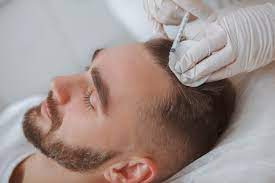
Platelet-rich plasma (PRP) is a treatment that uses your own blood to encourage healing. It works by taking a small sample of your blood and processing it to concentrate its platelets, which contain powerful proteins that play a role in your body’s natural healing processes. Here is some information about the science behind PRP and its role in healing:
Concentrating Platelets
The process of creating platelet-rich plasma starts with a standard blood draw. The drawn blood sample is placed inside a centrifuge, a machine built to spin at high speeds. In the centrifuge, your blood’s components are separated based on weight and density. The heaviest particles, red blood cells, settle at the bottom. Above that is a thin layer of white blood cells, and at the top, the plasma appears. Within this layer are the platelets. Some plasma is removed, which decreases the volume and increases the concentration of platelets within the remaining sample. The result contains several times more platelets than what you’d typically find in blood. This higher-than-normal concentration is what differentiates PRP from a regular blood sample.
Harnessing Growth Factors
Each platelet carries specialized structures known as alpha granules. Within these granules are numerous proteins, including growth factors. Growth factors play a role in intercellular communication, helping regulate various biological processes. In the body, platelets become activated when you experience an injury, quickly traveling to the injury site.
Once activated, the platelets release their growth factors. These proteins work as messengers, delivering signals to other cells in the area. Since PRP has a concentrated amount of growth factors, more are present at the injury site than would normally occur. This can help the body recruit additional cells to aid in healing.
Stimulates Regeneration
Once growth factors are released, they interact with the body’s local environment, speaking a biochemical language that nearby cells respond to. This signals the body to engage in its own natural repair processes. New cells are recruited to the area, and the growth of small blood vessels is encouraged. The development of new blood vessels helps bring nutrients and oxygen to surrounding tissues, supporting the body’s response. Over time, the area exposed to PRP undergoes these cycles of response and renewal.
In aesthetic treatments, PRP can be used for facials and facelifts. It involves applying or injecting platelet-rich plasma into the skin to promote collagen production, improve skin tone, and enhance overall texture. This treatment helps reduce the appearance of fine lines, acne scars, and other imperfections.
For non-surgical facelifts, PRP is used to target areas of sagging skin or volume loss. By injecting PRP into these regions, growth factors stimulate natural plumping and tightening over time without the need for invasive procedures. This method provides a natural-looking, subtle lift while also improving the skin’s overall health.
Schedule PRP Today
The platelets and growth factors within your blood are concentrated through a careful and controlled process. No foreign substances are used, keeping the method aligned with the body’s own resources. This can help minimize immune rejection, supporting long-term healing goals. Schedule a consultation with an aesthetic clinic to learn more about how PRP assists with skin rejuvenation.